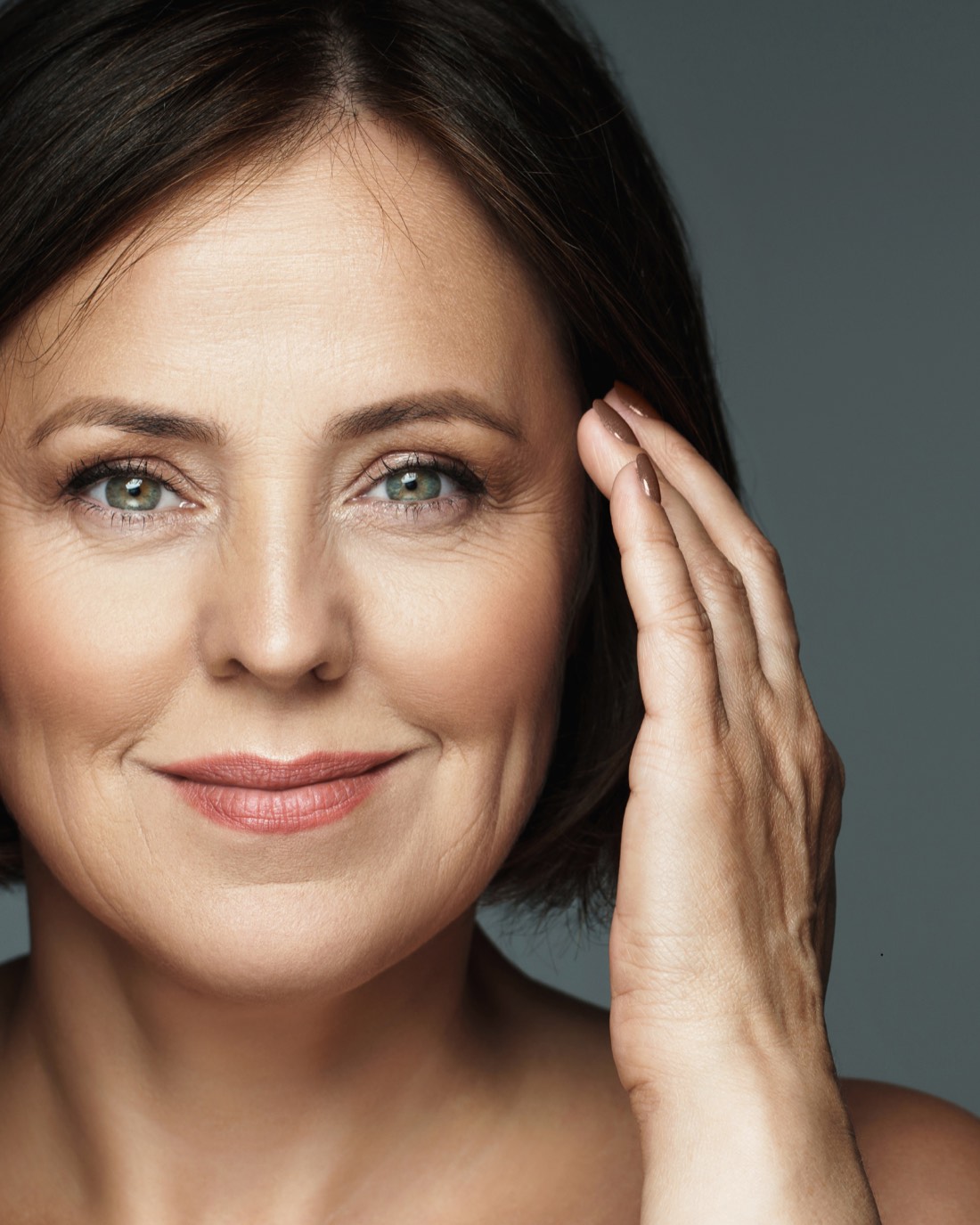
I completed a surgical residency before moving into aesthetics, so I am not someone who dismisses surgery out of prejudice. I left it for a different reason: I saw how much can be achieved before a scalpel ever becomes relevant — and how rarely most women actually need one. What follows is the map I draw for my own patients, with the honest borders marked.
First, know your wrinkle
Wrinkles are not one problem. Dynamic lines appear only when you move — the forehead creases, the lines around the eyes when you smile. Static lines stay when your face is at rest; they began as dynamic lines and were slowly printed into the skin. And then there is overall skin quality: sun-damaged, dehydrated, thinning skin that folds easily everywhere. Each type answers to different tools, which is why a single miracle method cannot exist.
Before any procedure, two unglamorous things outperform everything else over a decade: daily broad-spectrum sunscreen and a well-chosen retinoid. Photoageing causes the majority of visible skin ageing, and retinoids remain the best-evidenced topical ingredient we have for stimulating collagen. No treatment I offer works as well on skin that skips these basics.
The in-office toolkit, honestly described
Chemical peels — I work most with mandelic acid — renew the surface, soften fine lines, even out tone and make skin reflect light better. They excel at texture and early lines; they will not touch deep folds.
Microneedling builds new collagen through controlled micro-injury. Over a course of sessions it genuinely improves static fine lines, skin density and scars. The change is gradual and natural — measured in months, not days — and that is its strength, not its weakness.
Microcurrent works on the muscles beneath, improving tone the way exercise does, with a cumulative lifting effect that needs maintenance. Radiofrequency heats the dermis to trigger collagen remodelling and modest tightening over several months. Carboxytherapy — controlled carbon dioxide microinjections — improves local circulation and skin nutrition, which shows as better colour, density and glow. Facial massage, including buccal work, releases the muscular tension that drives many dynamic lines in the first place; a relaxed face folds less.
Where the honest border lies
Non-surgical methods soften, rebuild and slow. They do not remove significant excess skin or lift heavy ptosis — pronounced sagging of the lower face or eyelids belongs to a surgeon's conversation, and I will always say so rather than sell you a long course of disappointment. Equally, deep-set folds can be improved but rarely erased. Anyone promising a non-surgical facelift identical to surgery is describing marketing, not medicine.
The good news sits in the middle, where most of us actually live: skin that is starting to crease, lose density and look tired responds remarkably well to combined, sequenced care. My usual approach pairs a collagen-stimulating method with barrier support and massage, spaced sensibly through the year, adjusted to how your skin responds rather than to a fixed package.
Patience is part of the prescription. Collagen remodelling takes ninety days to begin showing; honest results arrive quietly. If you are unsure which of these doors is yours, one unhurried assessment with a specialist who examines your face — moving and at rest — answers more than any article can.