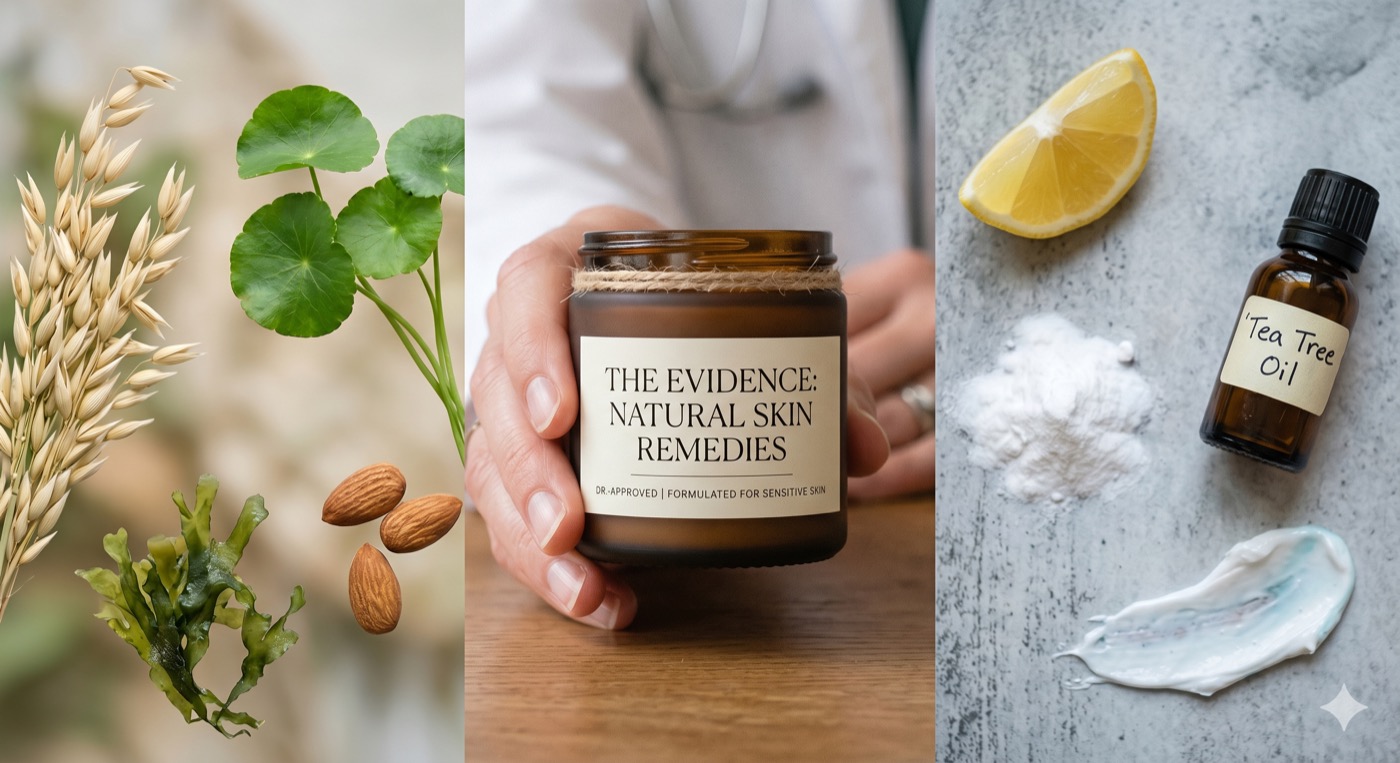
I trained as a physician before I ever touched a peel or a massage protocol, and that training left me with one stubborn habit: I ask for evidence. So when patients ask me about natural remedies, I never roll my eyes. Nature gave us some of the best ingredients in modern dermatology. But I also have to say this clearly — natural is a description of origin, not a guarantee of safety. Poison ivy is natural. Dose, concentration and formulation decide everything.
What genuinely earns its place
Colloidal oatmeal is one of the quiet heroes. It is one of very few botanical ingredients recognised as a skin protectant, and it genuinely calms itching, irritation and a stressed barrier. If your skin is reactive this winter, an oat-based cream is a far better friend than another trendy serum.
Centella asiatica — the cica in half the products you see — deserves its reputation. Its compounds support wound healing and soothe inflammation, which is exactly why I like it after procedures such as peels or microneedling, when skin needs comfort rather than stimulation.
Then there are the acids with natural roots that the lab has tamed for us. Mandelic acid comes from bitter almonds; its large molecule penetrates slowly, which makes it one of the gentlest exfoliating acids available — it is the peel I reach for most often with sensitive and darker skin. Azelaic acid, originally derived from grains, works beautifully on redness, uneven tone and breakouts. Both are natural in origin and standardised in concentration, which is the combination I trust.
I will also defend algae. Alginate masks made from brown seaweed will not rebuild your collagen, and anyone who promises that is selling. What they do reliably is hydrate, cool, reduce puffiness and seal active ingredients underneath — modest claims, honestly delivered. The same goes for squalane and linoleic-rich plant oils such as sunflower: they replenish the lipids your barrier is actually made of.
The fads I would skip
Lemon juice on the face is the one I beg patients to stop. Its pH is harshly acidic and uncontrolled, and combined with sunlight it can cause phytophotodermatitis — real chemical burns with pigmentation that takes months to fade. Baking soda sits at the opposite extreme: alkaline enough to strip the acid mantle your skin depends on.
Undiluted essential oils are a frequent cause of allergic contact dermatitis I see in practice. Toothpaste on pimples irritates more than it treats. And homemade sunscreen is genuinely dangerous — SPF cannot be improvised in a kitchen, and the burn arrives with full confidence that you were protected. Honey deserves a nuance: medical-grade honey has a real place in wound care, but the jar in your pantry is not sterile and not the same product.
How to think about it
My rule is simple: I do not choose between natural and synthetic — I choose between studied and unstudied, between formulated and improvised. The best ingredients from nature reach your skin through careful chemistry, with known concentrations and stable formulas. Patch-test anything new on your inner forearm for a few days, introduce one product at a time, and let your skin vote.
If something on your shelf stings, tingles dramatically or promises miracles, your skin is usually telling you the truth before the label does. And when in doubt about a persistent skin concern, a short conversation with a specialist will save you months of experiments.