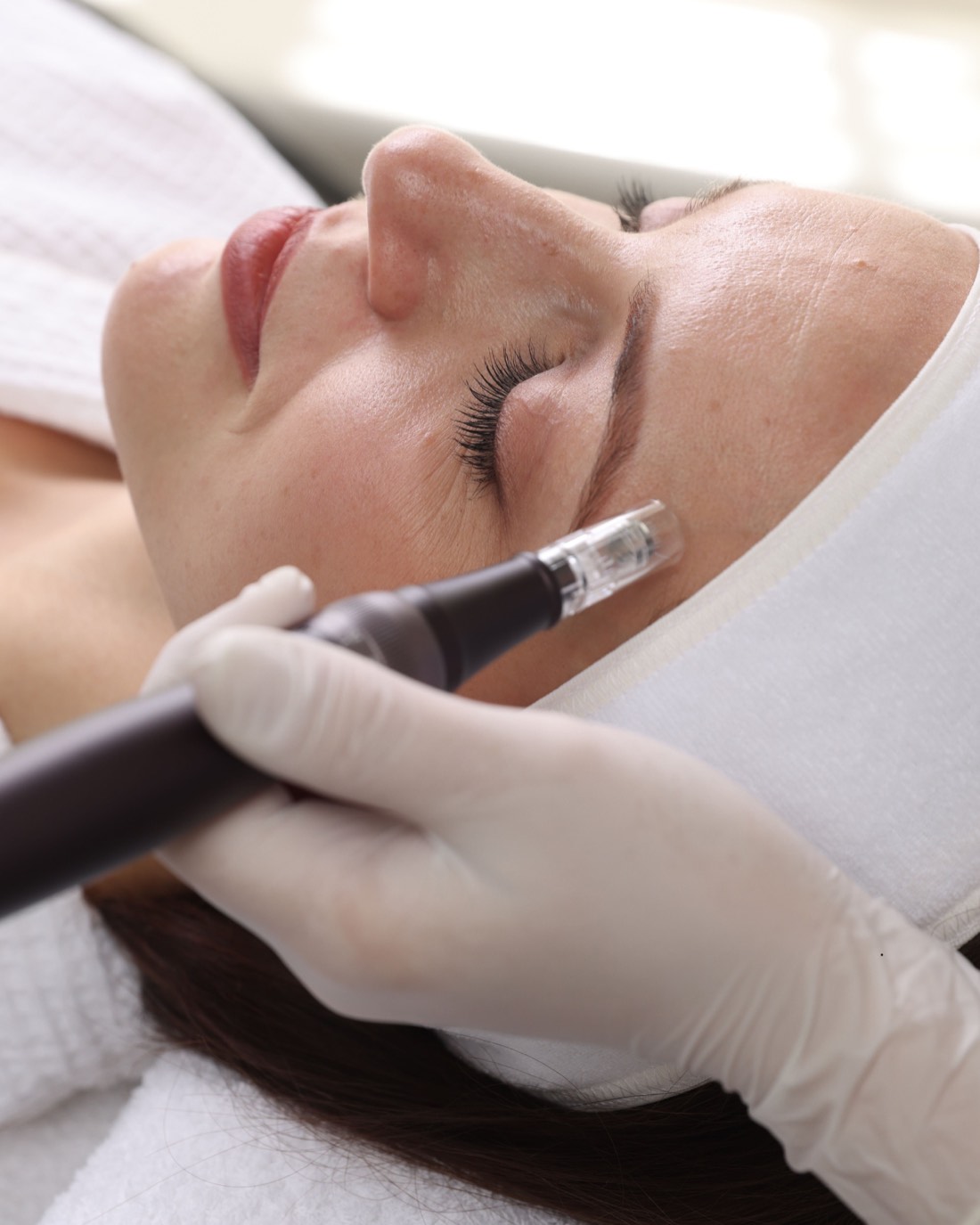
Deliberately puncturing the skin to improve it sounds like a contradiction, so let me explain it the way I would to a colleague — calmly, through the biology. Microneedling, or collagen induction therapy, is built on one of medicine's oldest observations: skin that is injured in a small, controlled, sterile way does not merely close the wound. It rebuilds the neighbourhood.
What actually happens beneath the needles
A Derma Pen device carries a sterile cartridge of fine needles that oscillate rapidly, creating thousands of microscopic vertical channels in the skin. Each channel is tiny and closes within hours — but the skin registers every one and launches its full wound-healing programme. First comes a brief inflammatory phase, when signalling molecules summon repair cells. Then proliferation: fibroblasts — the skin's construction workers — arrive and begin producing fresh collagen and elastin, while new capillaries improve local blood supply. Finally, over the following weeks and months, remodelling: early collagen is replaced by stronger, organised type I collagen, and the dermis genuinely thickens.
This timeline matters more than any before-and-after photo. New collagen begins forming within weeks, but meaningful remodelling takes around three months — and continues beyond it. Microneedling is a slow letter, not a text message. The skin you see ninety days after a course is the honest result; the glow at day five is mostly temporary swelling and renewal, pleasant but not the point.
Modern pens also let me adjust needle depth precisely for each zone — shallower on the forehead where skin is thin, deeper on acne scars on the cheek. That control, plus single-use sterile cartridges, is why I work with a pen rather than the rollers of the early era.
Who genuinely benefits
Microneedling rewards patience in people with the right indications: post-acne scars and uneven texture respond particularly well, because the channels break up disorganised scar collagen and replace it with better material. Fine static lines, enlarged pores, dullness and early loss of firmness all improve over a course — typically three to six sessions, spaced at least four weeks apart so each healing cycle completes. It suits almost all skin tones, including darker phototypes for whom aggressive lasers carry pigmentation risk, though sun discipline afterwards is non-negotiable.
Expect redness like a day at the beach for twenty-four to seventy-two hours, possibly light flaking, and a strict instruction from me: no makeup the first day, no active ingredients for several days, and conscientious sunscreen throughout the course.
Who should wait — and why I will say no
An honest practitioner's value lies partly in refusals. I postpone microneedling for active acne or any skin infection, because needles can spread inflammation across the face. I avoid it during rosacea flares, on a visibly compromised barrier, during pregnancy, and in patients with a tendency to keloid scarring. A history of cold sores needs preventive care first, since the procedure can reawaken the virus. And skin recently treated with isotretinoin deserves an individual conversation rather than a calendar rule.
What microneedling is not: a replacement for what injectables do, a one-session miracle, or a treatment for deep folds and sagging. What it is: one of the few methods with solid evidence that it persuades your own skin to manufacture its own collagen — gradually, naturally, without anything foreign left behind. If that philosophy appeals to you, an in-person skin assessment will show whether your skin is ready for it now or needs preparation first.